
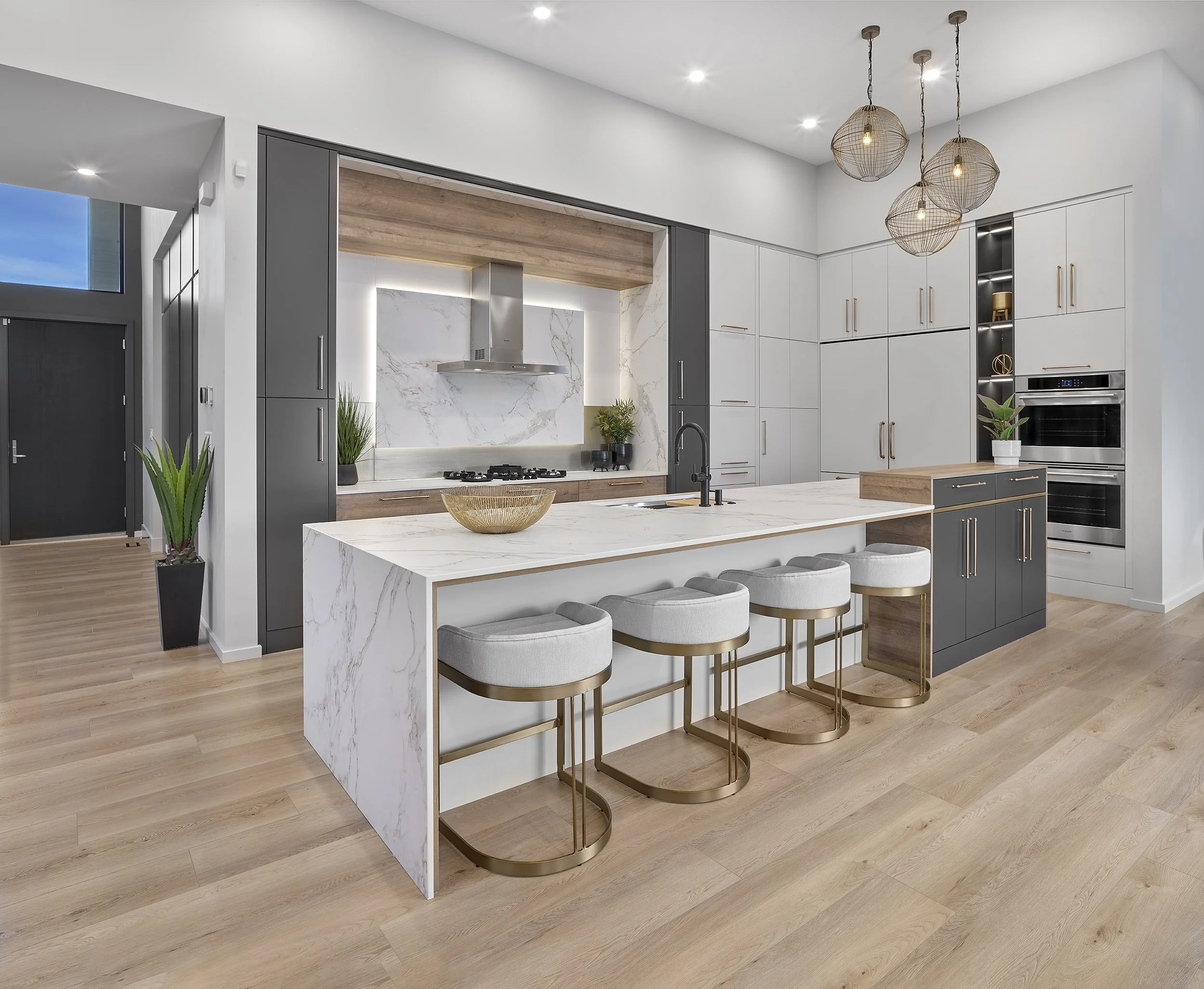
The main difference between custom and semi-custom cabinets is the scope of changes available. Semi-custom cabinetry usually starts with an established range of cabinet configurations and offers selected modifications. Custom cabinetry generally allows more flexibility in dimensions, detailing and the way individual pieces work together.
These labels are not used identically by every manufacturer. The most useful question is what a particular cabinet line can do for your room and how it is built.
Custom vs Semi Custom Cabinets
How semi custom cabinetry works
A semi-custom cabinet line typically offers a defined selection of door styles, finishes, sizes and accessories. Depending on the manufacturer, it may also allow changes to cabinet depth, width or other details.
This can work well when the available options meet your design needs. You may be able to create a personal combination of finishes and storage features without needing every component developed individually.
Before choosing a line, ask which modifications are available and where its limits lie. Two products described as semi-custom may offer very different levels of flexibility.
What custom cabinetry can change
Custom cabinetry can allow the design to respond more closely to a room’s proportions or a particular storage need. That might mean a pantry arranged around your small appliances, cabinetry designed for an awkward wall, or a feature that carries a consistent finish into an adjoining room.
Custom does not mean every idea can be built without constraints. Materials, hardware, appliance requirements and installation conditions still influence the design. The advantage is the ability to investigate solutions beyond a narrower set of standard configurations.
It is especially useful to discuss unusual requirements early. A distinctive range hood, integrated appliance panels or a specific interior arrangement may affect several neighbouring cabinets.
Compare the fit inside the room
Think about where a standard configuration would leave an awkward space or interrupt a visual line. Would a different depth improve a walkway? Does a tall cabinet need to align with nearby doors? Could the cabinetry make better use of a narrow wall?
A thoughtfully designed semi-custom line may address these needs. In other situations, broader customization may be helpful. Drawings should show how the proposed solution fits rather than relying on the category name alone.
Fillers and finishing panels also have legitimate roles in both approaches. They can provide clearance for doors and handles or accommodate walls that are not perfectly straight. Their presence is not, by itself, evidence of poor design.
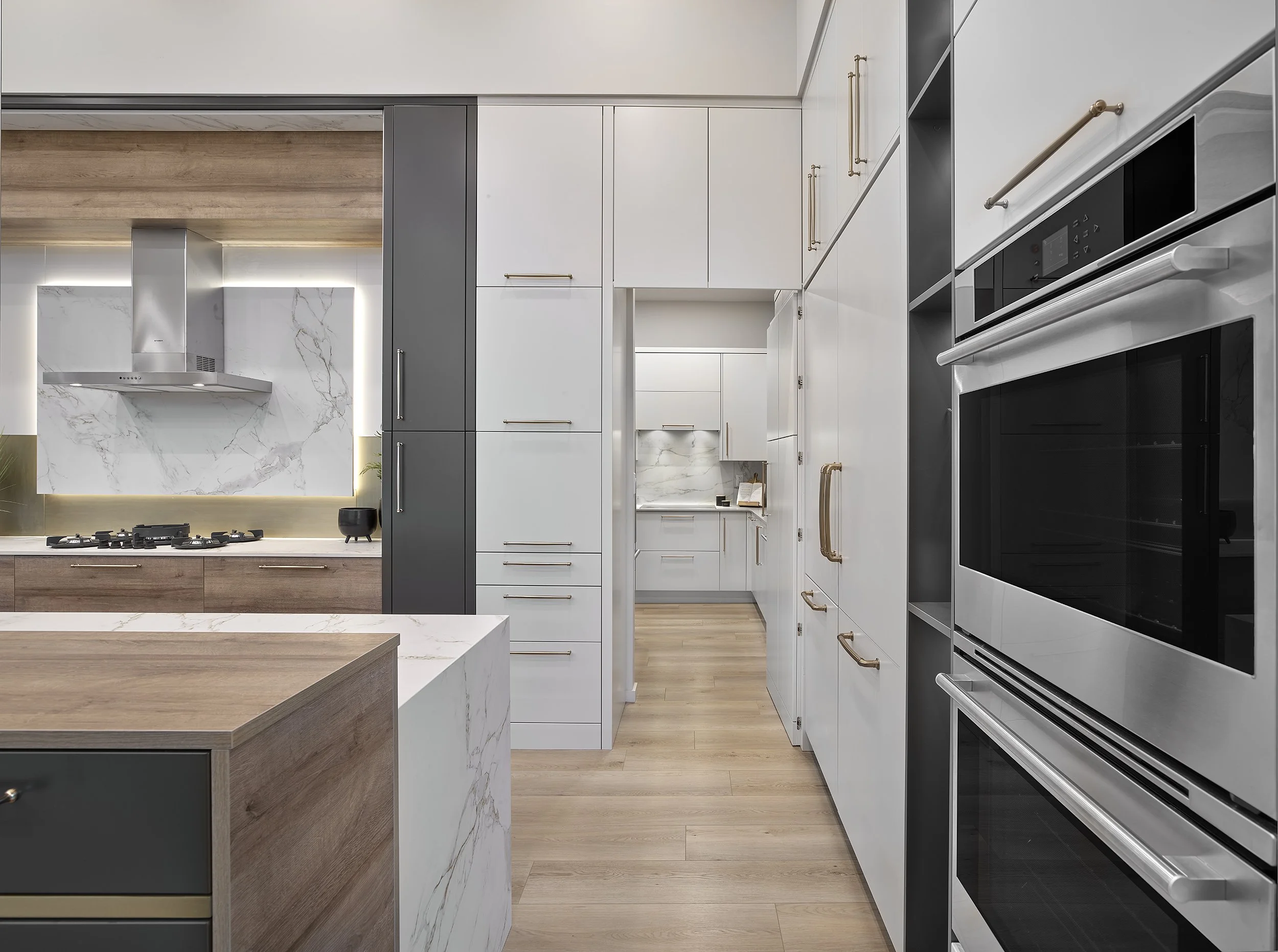
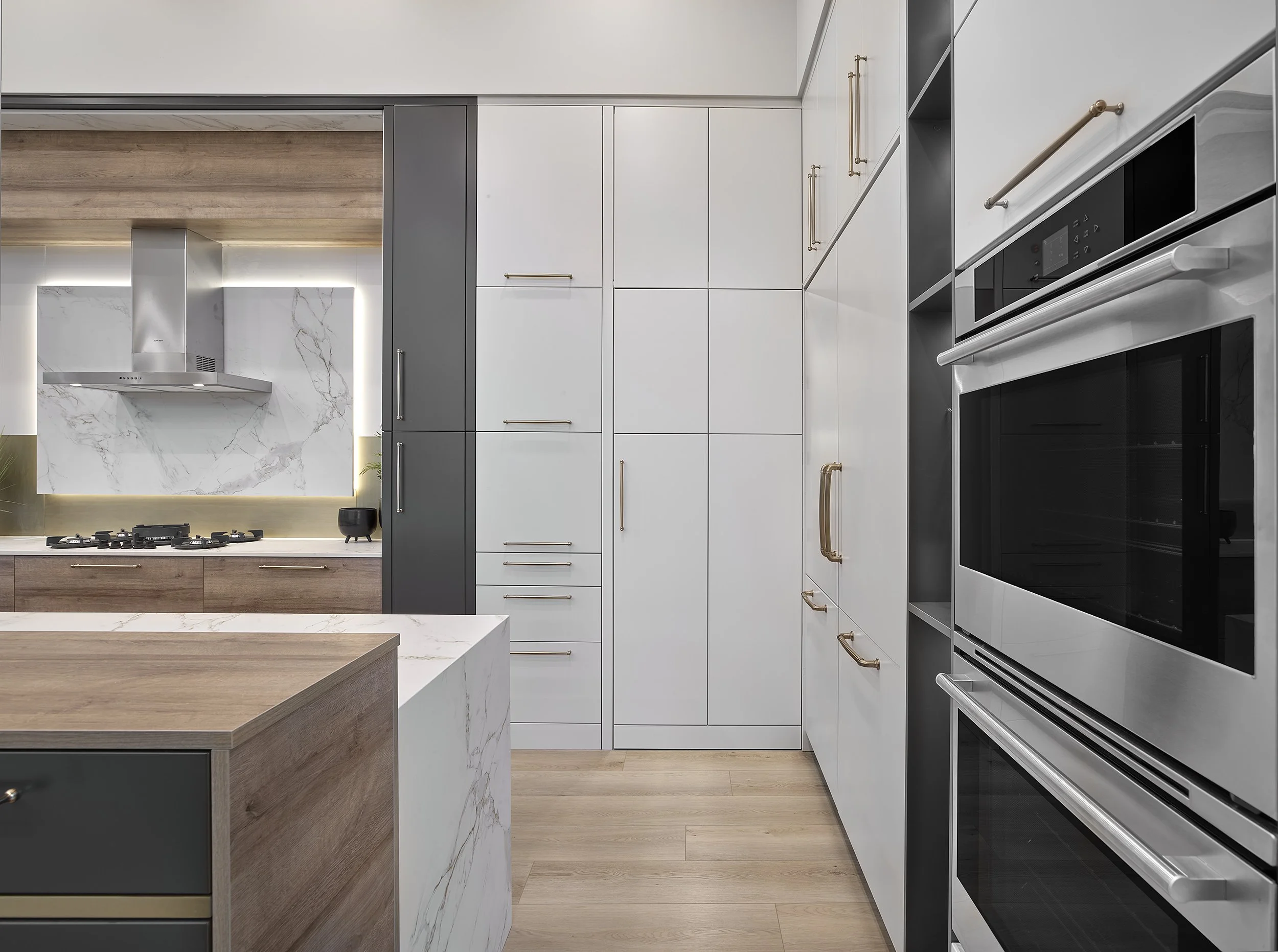
Look beyond the cabinet label
Custom cabinetry is not automatically better built than every semi-custom option. Compare the actual specifications, including the cabinet box, door construction, finish, hinges, drawer system and warranty.
Ask how the selected materials suit the intended finish. A painted door and a stained wood door may call for different construction choices. An all-wood description also does not tell you everything about performance or suitability.
In the showroom, open the doors and drawers. Look at the usable interior space and ask how adjustments and future service are handled. These details are more informative than a broad quality claim.
Design storage around your belongings
Make a short inventory before meeting your designer. Include your tallest appliance, largest serving platter, everyday cookware and recycling needs. Note anything that currently lives on the counter because it has no convenient home.
The dimensions of these items can guide the cabinet layout. A pull-out may be convenient, but its internal clearance must suit what you intend to store. The same applies to drawers with organizers, tray dividers and pantry shelves.
Whether you choose custom or semi-custom cabinetry, storage should be planned from the inside out.
Questions to bring to a consultation
Ask which dimensions can change, which finishes are available and how your preferred storage accessories fit. Confirm who checks site measurements, coordinates appliance specifications and handles installation. Request a clear explanation of any design compromises before approving the drawings.
At Towne & Countree Kitchens, our designers can help you explore custom cabinetry options in the context of your space. Book a consultation and bring your inspiration, room photographs and list of everyday storage needs.