
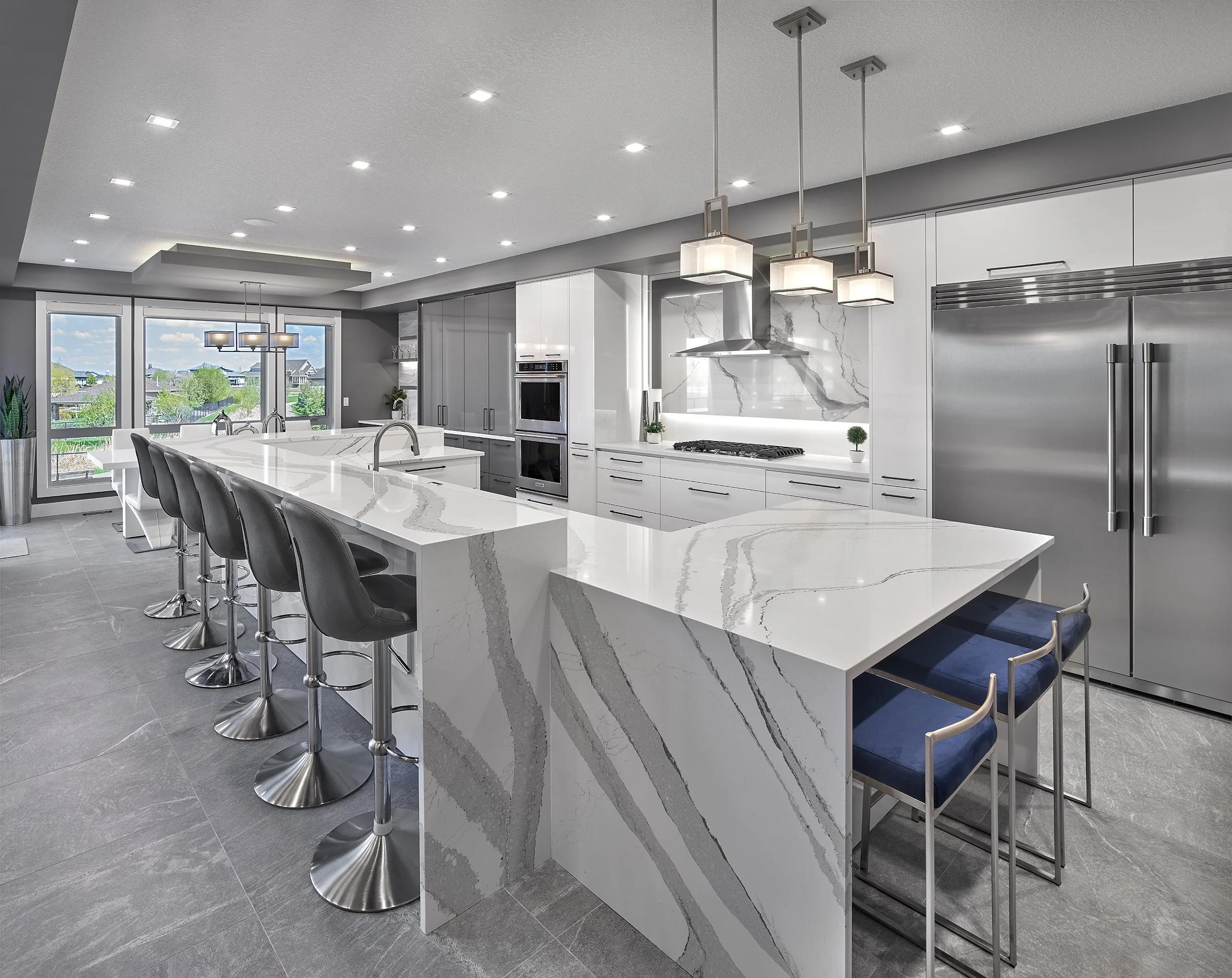
Quartz vs Granite Countertops
Quartz and granite can both create a beautiful, durable kitchen countertop. Quartz is often a good fit for homeowners who want a manufactured surface with a broad range of designs and no routine sealing. Granite appeals to those who enjoy the variation of natural stone and are comfortable following care guidance for their particular slab.
Choosing between them starts with how you use your kitchen, the look you want and the maintenance routine that suits your household.
Understanding the materials
Quartz countertops are engineered surfaces made with mineral content and binders. Granite is quarried natural stone, cut into slabs and fabricated for installation. Quartz should also not be confused with quartzite, which is a different natural stone material.
That distinction helps explain the appearance of each surface. Quartz collections offer designed patterns, from relatively quiet colours to prominent veining. Granite’s mineral composition creates natural movement and variation, so two slabs with the same commercial name can look different.
For granite, seeing the actual slab helps you understand what you are selecting. For quartz, a large sample or full slab view is still valuable. A small sample may not show the scale or placement of a dramatic pattern.
Choosing a look that works with your cabinetry
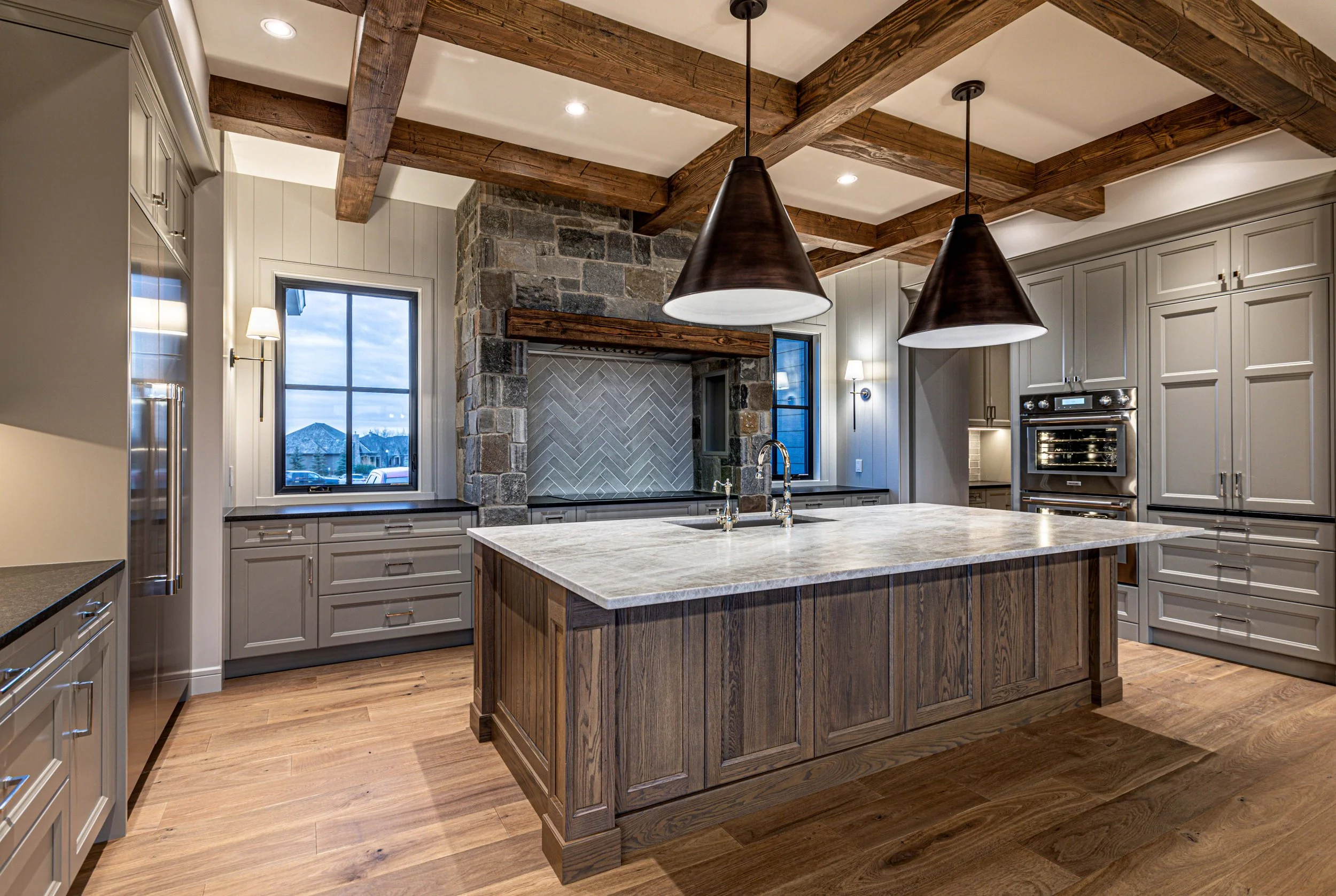
Start by deciding which feature should attract attention. A heavily veined countertop can become the focal point beside simple cabinet doors. If your cabinetry has a distinctive wood grain or detailed profile, a quieter surface may let those details stand out.
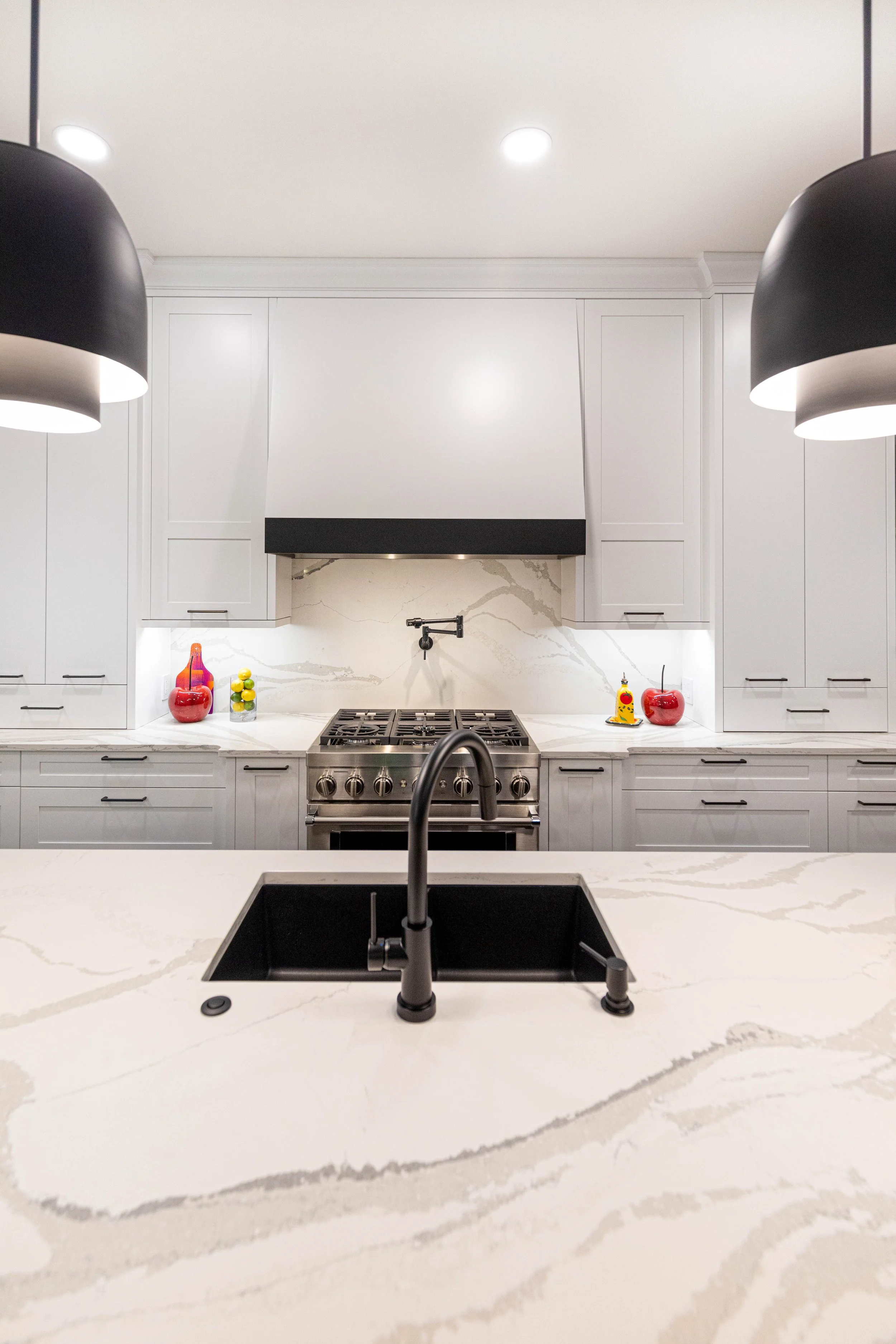
Look at the cabinet finish, countertop and backsplash together. Whites can have warm, cool or grey undertones that only become obvious when the samples sit beside one another. View the combination under lighting similar to the lighting in your home.
The edge profile matters too. A simple edge can suit a clean-lined kitchen, while a more shaped profile introduces another layer of detail. Ask to see how the edge and slab thickness will look against your cabinet doors.
Comparing care routines
Quartz generally does not require sealing. Cambria, for example, recommends a soft cloth and warm water, with mild soap if desired. Its product care guidance also explains which cleaners and treatments to avoid.
Granite care depends on the stone and any treatments already applied. Some slabs benefit from an impregnating sealer, while others may not need one. Follow your supplier’s advice rather than assuming every granite countertop needs the same resealing schedule. The Natural Stone Institute’s care guide explains that sealing improves stain resistance rather than making stone stain-proof.
For either surface, clean spills promptly and use products recommended for the specific material. A finish that looks attractive in the showroom should also suit the way you prefer to clean at home.
Heat and everyday wear
Neither material should be treated as indestructible. Use cutting boards and protect the countertop from hot cookware and heat-producing appliances according to supplier instructions. Cambria specifically recommends appropriate heat protection and notes that its quartz is not heat-proof.
Granite can tolerate heat, but the Natural Stone Institute still recommends trivets or mats. Choosing granite should not mean abandoning surface protection.
Edges and areas around sinks deserve care with either material. Avoid striking them with heavy cookware. The habits that protect your countertop are usually straightforward and easy to build into everyday use.
Planning the installation details
Ask how seams, cutouts and pattern direction will work with your layout. A dramatic design may look very different across a long island than it does on a small sample. Neither quartz nor granite guarantees a seamless installation.
Discuss your sink, faucet and appliance selections before fabrication. Waterfall ends, overhangs and supports also need to be coordinated with the cabinetry. These details influence the finished result just as much as the colour does.
Finding your preferred countertop
Choose quartz if its available designs and care requirements suit your routine. Choose granite if the character of a particular natural slab is what you want to bring into the room. There is no single winner for every kitchen.
Explore cabinetry and countertop options with Towne & Countree Kitchens, or arrange a consultation to compare finishes for your Edmonton kitchen.